Stepping onto the mats for the first time can be terrifying.
Most adults actively avoid combat sports because they picture a survival-of-the-fittest nightmare. For an absolute beginner, walking into a martial arts facility often feels like volunteering to be a crash-test dummy in a room full of aggressive brawlers. (Tell me if this sounds familiar: you want the physical results, but you are absolutely dreading the gym anxiety).
But that is complete rubbish. Premium training facilities operate in a highly controlled, ego-free environment. If you want to build explosive power and relieve massive amounts of professional stress, you just need to pick the right system.
Let's put this in perspective. There are three prominent contenders in the stand-up striking world. Understanding the mechanics of each one will help you find your exact fit.
Boxing: The Sweet Science
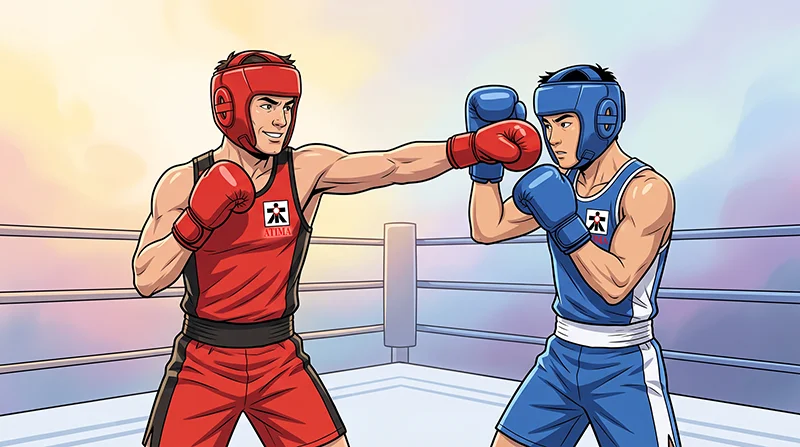
It's simple. You only have two points of contact. Your left fist and your right fist.
Because fighters cannot rely on kicks to keep opponents at a distance, they develop an incredibly sophisticated kinetic chain. The stance is highly bladed. This means you turn your body sideways to present the smallest possible target to your opponent. You learn complex head movement and you slip punches with technical precision.
But there is a catch. The bladed stance is a massive liability if someone starts throwing kicks at your lead leg. The primary safety profile here also involves high head impact exposure during sparring sessions.
Kickboxing: The Four-Point Hybrid
Now we add the lower body.
Put simply, this discipline fuses traditional boxing hands with devastating low kicks. You operate with four points of contact. The kickboxing stance squares up slightly so you can remain highly mobile. Instead of staying glued to one spot, you use dynamic footwork to transition rapidly between punching sequences and kicking finishes.
What's exciting is the pacing. Clinching is heavily restricted in this rule set. Referees will immediately break up any prolonged grappling. That creates a highly aerobic, fast-paced cardiovascular engine which builds incredible fitness while prioritising head protection.
Muay Thai: The Art of Eight Limbs
This is where things get entirely different.
Welcome to the art of eight limbs. Fighters utilise their fists and feet. They also throw brutal knees and slicing elbow strikes. The stance is tall and completely square. Your weight sits lightly on your front leg so you can rapidly lift your shin to block incoming attacks.
Unlike the other two styles, this system relies heavily on the clinch. This is a form of stand-up grappling where you physically control your opponent to deliver single-strike power counters. Because elbows and full sweeps are permitted, the contact level is incredibly high.
Technical Comparison: The Key Differences
Understanding the difference between Muay Thai and kickboxing comes down to how the body is positioned and what weapons are legally allowed.
Western Boxing
- Relies strictly on two points of contact.
- Features a bladed stance with a low centre of gravity.
- Focuses heavily on punch volume and head slipping.
- Carries a risk of high head impact exposure in sparring.
Kickboxing
- Utilises four points of contact for striking.
- Maintains an upright and highly mobile stance.
- Combines fluid punching sequences with leg kicks.
- Limits clinching to keep the action fast and aerobic.
Muay Thai
- Engages eight distinct points of contact.
- Requires a tall stance with a light lead leg.
- Permits full stand-up grappling and sweeps.
- Involves frequent high contact from elbow strikes.
Find Your Starting Point
So as long as you understand these mechanics, the choice becomes clear.
If you are searching for premium martial arts classes Perth, ATI offers the ultimate hybrid experience. Our Adult Kickboxing program takes the dynamic combinations of kickboxing—the fluid punching and mobile footwork—and completely removes the dangerous elbow strikes of traditional Thai fighting.
You get the cardiovascular intensity. You avoid the high-impact injuries.
Our classes are engineered for adult beginners who want to learn real self-defence without surviving a gauntlet of “spazzy white belts”. We mandate a strictly ego-free environment where tapping out is respected as a safety mechanism. Training happens entirely at your own pace. (Day one is genuinely easy).
Ready to stop running on a monotonous treadmill and start building real physical focus?