
Every parent wants to keep their child safe. It's that simple. But when looking for after-school activities, the choices usually bounce between chaotic team sports and endless screen-time.
Enter Brazilian Jiu-Jitsu (BJJ).
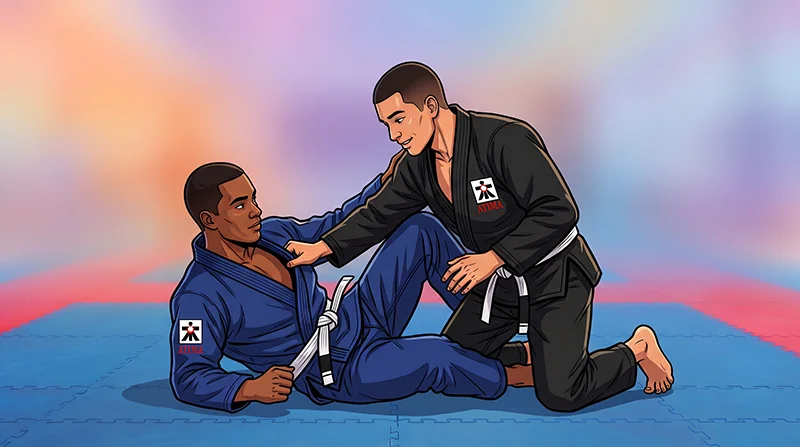
Put simply, grappling is a profoundly effective tool for character development. And it works. Rather than teaching kids to trade punches on the playground, BJJ focuses entirely on managing distance. A smaller child learns to neutralise an opponent using body weight and mechanical leverage. They don't rely on aggression at all. This gives parents total peace of mind—especially those worried about schoolyard bullying. A child who knows they can protect themselves projects a quiet confidence that deters bullies from targeting them in the first place.
The Neuroscience of Focus
Think about a traditional classroom. Sitting at a desk. Staring at a board. It is exhausting for a developing brain. BJJ uses an entirely different engine. Because it relies on dynamic open motor skills—where a child must constantly adapt and react in real-time to the unpredictable movements of a live training partner—the practice forces deep physical and mental focus. Researchers studying child development consistently find that structured, complex movement—like BJJ—helps ground kids who struggle with focus or ADHD. It's like flipping a switch in a chaotic room. The discipline they build on the mats naturally spills over into their homework or their morning routines. (yes, even on the days getting them out the door feels like a battle).
Safety and Leverage
Many parents hesitate at the phrase ‘martial arts'. They immediately picture aggressive brawlers.
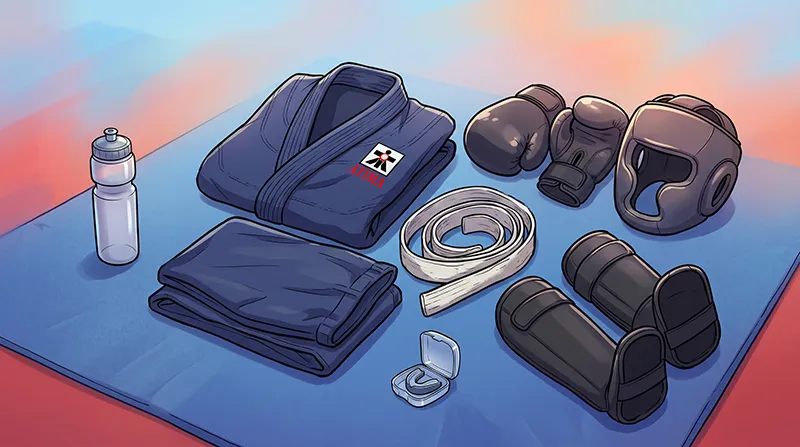
Let's put this in perspective. Youth BJJ eliminates striking completely. There is no head-hunting. If you’re looking for a structured outlet in Perth, our full-time academies in Claremont, Malaga, Midland, and Joondalup have been running age-specific programs designed exactly for this. Numerous sports medicine studies comparing youth athletics found that the injury risk in martial arts programs with a strict, no-striking curriculum is significantly lower than more traditional high-contact sports like girls' soccer. At our local ATI academies, we use professional-grade foam mats designed to absorb high-impact forces. Kids learn proprioceptive safe falling techniques before they ever attempt a sweep. They learn to stay calm under intense physical pressure.
Age-Appropriate Frameworks
Mixing four-year-olds with moody teenagers is highly ineffective. A premium curriculum groups students strictly by developmental stages to ensure the instruction lands properly:
- Ages 4-6 (Littles): We focus on basic movement patterns through games. It’s about building coordination without them even realising they are training.
- Ages 7-9: The training gets more technical as they mature. We introduce positional control and light sparring in a heavily supervised environment.
- Ages 10-15 (Teens): A more demanding, intense curriculum designed to match their cognitive and emotional development. Older kids learn complex grappling combinations and develop character in a healthy, competitive mat culture.
The Reality of the Belt System
Then there is the belt progression. Earning a new rank takes immense patience. In kids' BJJ, the journey moves through White, Grey, Yellow, Orange, and Green belts. Each new colour serves as a visual marker of your child's commitment. Kids learn quickly that advancement isn't handed out just for participating. It must be earned through hard work. Over time, they build a sort of physical grit that doesn’t fade when they hit a tough week at school.
Starting a new sport such as Brazilian Jiu Jitsu is intimidating. A lot. Experienced coaches know this dynamic perfectly. They actively manage the mat culture to ensure your child's first few weeks feel incredibly welcoming. Before long, that initial awkwardness—all those unfamiliar movements they were worried about—just fades away. They make fast friends, start looking forward to every session, and eventually you’ll find yourself part of a genuine community on the sidelines. The resilience they build on the mats will carry them through the rest of their lives.