A lot.
That is how much tension you are carrying right now. The human stress response, governed by the Hypothalamic-Pituitary-Adrenal (HPA) axis, historically evolved to deal with acute physical threats. Today? That exact same biological alarm is continuously activated by psychological stressors—leaving high-performing professionals drowning in elevated baseline cortisol levels and battling systemic inflammation.
But there is a highly effective somatic outlet to manage chronic burnout.
We know martial arts for stress relief works for adults desperate to escape the monotony of traditional treadmill-based workouts. The physical transformations are highly visible, yet the neurobiological impacts are even more profound.
Think about it like this: active kickboxing training acts as a controlled simulator. It triggers the acute physical stress response, which is then followed immediately by profound physiological recovery.
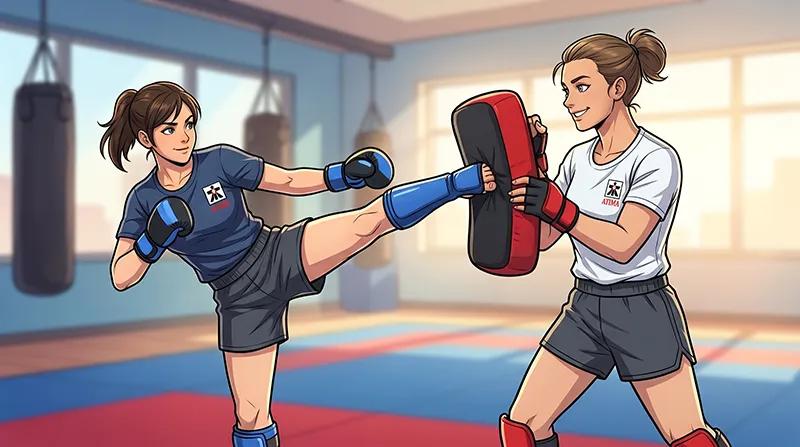
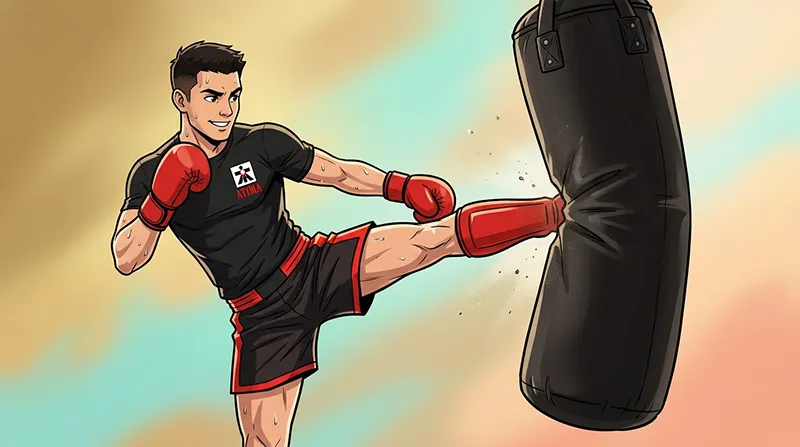
When you strike a heavy bag—transmitting physical force directly through a target while managing rotational torque—you achieve a superior psychological release compared to repetitive cardiovascular exercises like swimming laps.
Escaping the Autopilot Loop
And why is this better than traditional cardio? It's simple. Running on a treadmill is a closed motor skill. It is entirely predictable. That predictability actively encourages your brain to default to autopilot, leaving you to just sit there stewing in your own racing thoughts while accumulating even more physical tension in your musculature.
Kickboxing training is the exact opposite. It operates as a dynamic, open motor skill requiring real-time adaptation in an unpredictable environment. Look at the cognitive demands of striking. You must continuously manage your physical balance while reacting instantly to unpredictable targets—a continuous feedback loop that demands deep physical focus and prevents the cognitive drift common in standard gym routines. That complexity forces your brain into an absolute flow state.
This complete absorption in the present moment temporarily silences the default mode network (DMN). That is the exact neural pathway responsible for repetitive worrying and anxiety. Simultaneously, the physical intensity triggers a massive neuromuscular synthesis of dopamine alongside -endorphins to stabilise your emotional state without the slow-onset wait of a standard “runner's high”. The relief is immediate.
The Biological Biomarkers of Kickboxing Striking
Let's put this in perspective. Here is how your body responds across different states of activity:
- Cortisol Regulation: A sedentary lifestyle traps you in a state of systemic inflammation with chronically elevated cortisol. Technical kickboxing breaks this cycle by delivering a rapid, acute spike in physical stress that forces a profound drop in those baseline levels—a sharp contrast to the temporary, minor decrease you get from linear running.
- Neuromuscular Endorphin Synthesis: You aren't getting these neurochemicals sitting at a desk. And while a long run drip-feeds a moderate “runner's high,” striking a heavy bag forces a massive, immediate synthesis of -endorphins.
- Somatic Aggression Discharge: Tension accumulates in your musculature when you just sit all day. Traditional aerobic exercise barely scratches the surface here, but kickboxing provides maximum release through direct physical force transmission.
- Vagal Nerve Tone & The DMN: We group these together because they dictate your mental baseline. Persistent sympathetic stress and active rumination (the Default Mode Network) dominate the sedentary brain. Running merely leaves the mind wandering. Kickboxing? The deep diaphragmatic breathing required for striking creates high vagal tone, while the sheer physical complexity of the movements completely suppresses the DMN.
Engineering an Ego-Free Environment
Many adults are held back by gym anxiety. They picture an intimidating “fight club” culture.
Not here.
At ATI Martial Arts, we have deliberately engineered an ego-free training environment. The dojang is a structured setting dedicated entirely to your personal development. You will be training on professional-grade, high-density foam mats engineered specifically to absorb high-impact forces. (This means you don't have to worry about the wear and tear of a hard floor).
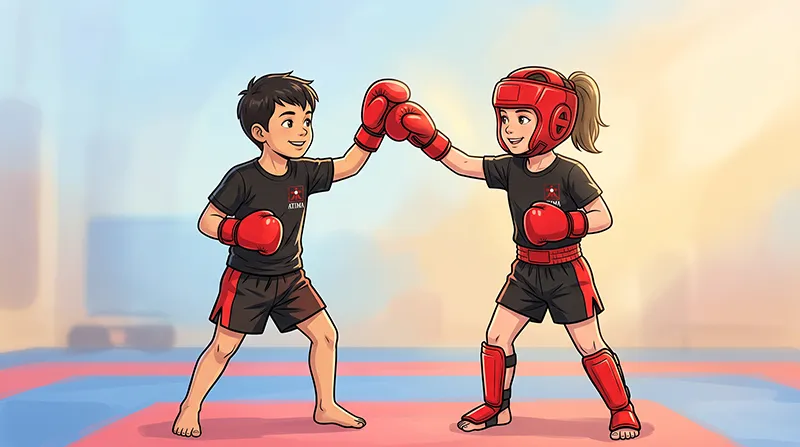
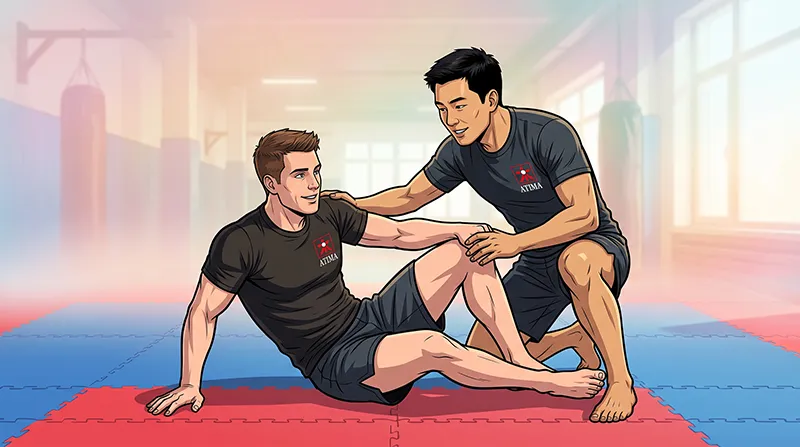
Instead of throwing you into unguided sparring matches, our Instructors actively manage the mat culture—keeping training at controlled speeds and stopping excessive force before it starts—so you actually learn at your own pace. By training alongside supportive peers, you build a practical psychological resilience that carries over directly into your personal and professional life.
So look at your schedule. Are you going to spend another week running on fumes, or are you ready to finally discharge that stress?